
 Back
Back
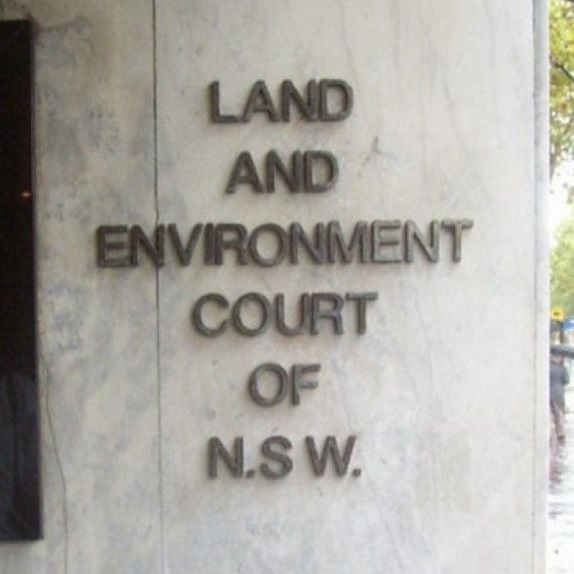
Court judgement for Mukti-Gupteshwar and 13th Jyotirlingham - seeking donations due to high costs
This court process cost Prem Misra and Mukti-Gupteshwar well over $AUD 750,000 and donations from friends and supporters are requested to help cover costs.
As outlined below, the case involved intricate details that - ultimately - are the cost of effecting social change to accept a new community in Australia, which was challenged by the council. This case is a win for all friends and supporters, and so your financial contributions are kindly and humbly requested to help cover the significant cost.
Please pledge your tax-deductible donation here.
Key successes from the Court outcome in 2025
1. Development Consent Was Ultimately Granted
The most fundamental success: the Court granted development consent for DA 783/2022/DA-C.
This ends the risk of outright refusal and confirms that the use of the site is lawful in principle, subject to conditions.
2. Recognition of Mixed Use: Dwelling + Community Facility
The Court accepted:
- Continued residential use of part of the building, and
- Community facility use of other parts of the same building.
This is critical because councils often resist mixed-use outcomes on semi-rural or sensitive sites.
The decision legitimises a hybrid residential–community model, rather than forcing a single-use outcome.
3. Validation of Community Facility Use (Non-Commercial, Non-Worship)
The Court confirmed the site can lawfully operate as a community facility under the Campbelltown LEP.
Importantly:
- The Council’s attempts to characterise the use as unlawful or undefined were rejected.
- The use is now clearly defined, regulated, and lawful.
Cultural, social, and community uses are explicitly preserved.
4. Council Required to Accept an Amended Planning Pathway
The Court endorsed a statutory mechanism to amend the earlier 1995 consent (DA397/95).
This is significant because:
- It prevents Council from treating the old consent as an obstacle.
- It provides legal certainty by integrating old and new approvals cleanly.
The judgment confirms Council must deal with the site as a lawful, evolving development, not a frozen historical approval.
5. Council’s enforcement position was effectively neutralised
Although many conditions are imposed, the structure shows:
- The Court preferred regulation and management, not prohibition.
- Allegations of unlawful use were resolved by formalising controls, not shutting down activities.
This represents a shift from punitive enforcement to conditional approval.
6. Acceptance of a detailed Plan of Management (POM)
The Court accepted that:
- Amenity impacts (noise, traffic, parking, numbers) can be managed operationally.
- A Plan of Management is an adequate control tool, rather than refusal.
This reinforces that the operator (the Society) is trusted to manage compliance under supervision, not exclusion.
7. Defined and predictable operating envelope
Key parameters are now fixed:
- Operating hours
- Maximum site capacity (178 people)
- Parking and traffic controls
- Noise thresholds
This provides long-term certainty and protects against arbitrary future objections.
8. Council’s more extreme positions were not accepted
The Court did not:
- Order demolition of the main building
- Require cessation of all community use
- Require conversion to a single-use development
Instead, it chose regularisation and upgrade, a materially better outcome.
Overall strategic win
Prem Misra and Mukti-Gupteshwar won the right to continue and formalise the site as a lawful, mixed residential and community facility, under clear rules, after a contested process.
The Court’s approach shows:
- The Council was not vindicated in seeking refusal or shutdown
- The applicant was seen as capable of compliance
- The site has a legitimate community role, not an unlawful or rogue use
This is a substantive win, not merely a procedural one.